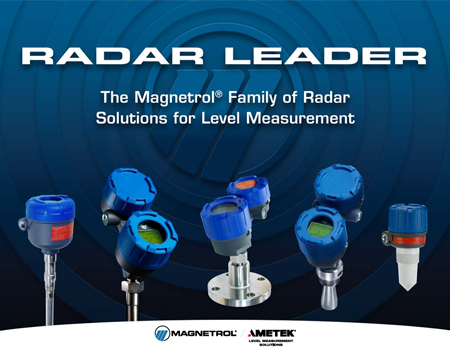






Bulk solids level measurement rarely happens under ideal conditions. Dust in the vapor space, uneven material surfaces, and changing fill behavior are common realities across industries such as mining, chemicals, food, agriculture, and building materials.
In these environments, accuracy alone does not define success. Engineers are often challenged by the amount of intervention required to keep measurements stable and trustworthy. Long commissioning times, repeated alignment efforts, and ongoing troubleshooting can place pressure on uptime and operational confidence.
Over time, expectations with respect to level measurement have shifted. Customers increasingly look for solutions that are not only accurate, but also practical to apply and maintain. Technologies that simplify commissioning, reduce manual intervention, and provide clear diagnostic insight help teams spend less time adjusting instruments and more time running the process.
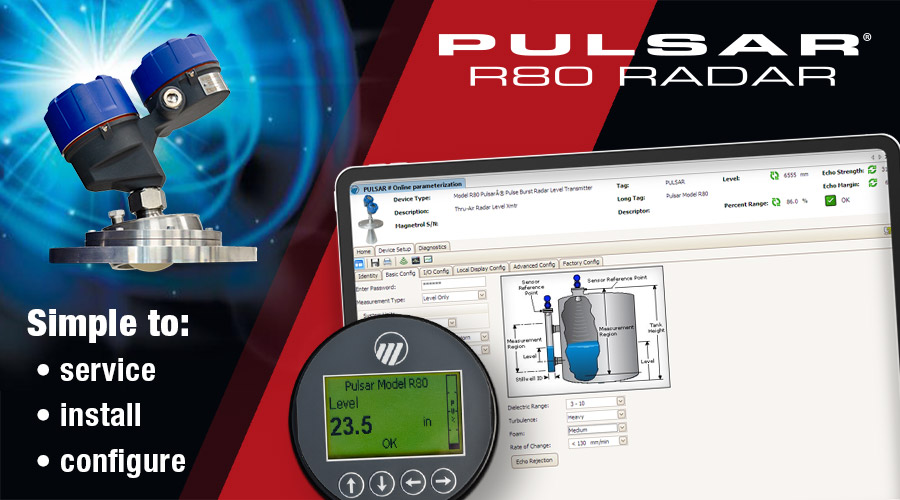
Radar has become a preferred technology for many bulk solids applications because it is not dependent on product density or changing material properties in the same way as some contact-based methods. However, not all radar solutions perform equally well in the presence of dust, buildup, and dynamic filling. These conditions can introduce uncertainty if signal focus, configuration, or diagnostics are limited.
Recent advances in high frequency FMCW radar, antenna designs, and configuration tools are helping address these challenges. Narrower beam angles support focused measurement in vessels with uneven surfaces or internal structures. Strong signal quality provides additional margin in dusty environments. Improved commissioning tools and diagnostics help engineers understand what is happening during operation and guide next steps when conditions change.
The result is a shift in how bulk solids level measurement is evaluated. Reliability is no longer defined only by measurement performance, but also by the effort required to achieve and maintain it. Solutions that reduce intervention, support uptime, and provide usable insight play an important role in maintaining confidence over time.
Simplifying bulk solids level measurement does not require adding complexity. It starts with reducing it, through thoughtful technology choices that support reliability, usability, and long term confidence in the measurement.
Lear More
Register for the Simplifying Bulk Solids Level Measurement webinar
Review real world bulk solids radar applications