






- October 10, 2024
Why Mechanical Instruments Remain Essential for Industrial Level Measurement
In today’s fast-paced industrial world, advanced technologies are emerging constantly. However, some tried-and-tested methods, like buoyancy-based level measurement using floats and displacers, continue to stand the test of time. Rooted in the principles of Archimedes, Magnetrol® mechanical level switches and displacer level transmitters have been essential tools for industries like oil and gas, power generation, and chemical processing for decades. These instruments are trusted for their simplicity, reliability, and cost-effectiveness in safety-critical applications and remain vital for industries where durability and low maintenance are priorities.

Buoyancy-Based Solutions Continue to be Specified
Buoyancy-based instruments such as mechanical level switches and displacer level transmitters offer key advantages in high-pressure, high-temperature environments and safety-critical applications. These products are often preferred because of their mechanical integrity with a reputation to last for decades in critical industrial processes.
- Specific Gravity (SG): Buoyancy-based instruments rely on the specific gravity of the medium being measured. This must be carefully considered for proper operation of the level switch or displacer level transmitter.
- Power Requirements: Unlike many electronic instruments, buoyancy switches do not require additional power. Their mechanical nature means they can function in locations where power access is limited, reducing complexity and increasing reliability in safety-critical environments. Displacer transmitters are available as two-wire loop powered devices.
- Installation Flexibility: Buoyancy instruments can be installed in a variety of ways, including top-mount, side-mount, or external chamber installations, making them suitable for a wide range of industrial applications.
Where Buoyancy Products Excel
Buoyancy products are utilized as both level switches and continuous level transmitters – each version of the technology has advantages in different applications.
Float switches are commonly deployed as boiler level controls and in ancillary steam and power generation applications where high temperature and pressure environments are frequently present. Walk through a power plant and you will typically see float level switches housed in external cages (or chambers) mounted to the outside of operating vessels.
In the Oil & Gas sectors, mechanical displacer switches are relied upon for various applications including storage tank liquid and floating roof detection. Outside of total level measurement and high/low switches, certain float switch configurations and displacer level transmitters are relied upon for liquid-liquid interface measurement as well.
These instruments thrive in applications where simplicity and robustness are critical. While they may not offer the same level of advanced diagnostics as newer level transmitter technologies, their reliability, low cost of ownership, and familiarity to users in the process industries make them a technology that will continue to be specified.
Excel in Safety and Compliance
Buoyancy-based products such as mechanical float and displacer level switches play a crucial role in the safety critical process industries. They are often used in overfill prevention systems of hazardous liquids and in applications requiring extremely high temperatures and pressures. In some cases, these instruments are one of the last lines of defense for preventing costly accidents and will assist in maintaining compliance with industry standards such as API 2350. As a result, buoyancy products are trusted for both personnel safety and environmental protection.
Choosing the Right Technology
No single technology fits every application. While buoyancy-based instruments offer advantages in many situations, it’s essential to evaluate the specific needs of each application. For example, in situations where the specific gravity of a liquid varies significantly and an accurate level transmitter is required, then an alternative technology like Guided Wave Radar has advantages. However, buoyancy remains a top-tier solution for many applications requiring safety and reliability in the process industries
Real-World Impact on Profitability and Safety
Magnetrol-branded mechanical level switches don’t just deliver reliable performance—they also help reduce long-term costs. Their low maintenance requirements, combined with their mechanical design, lead to fewer failures and less downtime. As a result, they often provide a higher return on investment (ROI) compared to more complex systems.
By prioritizing safety and reliability, float and displacer switches can play a crucial role in preventing costly accidents, environmental risks, and production downtime. Their contribution to operational efficiency and safety ensures that plant personnel can focus on optimizing performance, knowing that critical measurements are in trusted hands.
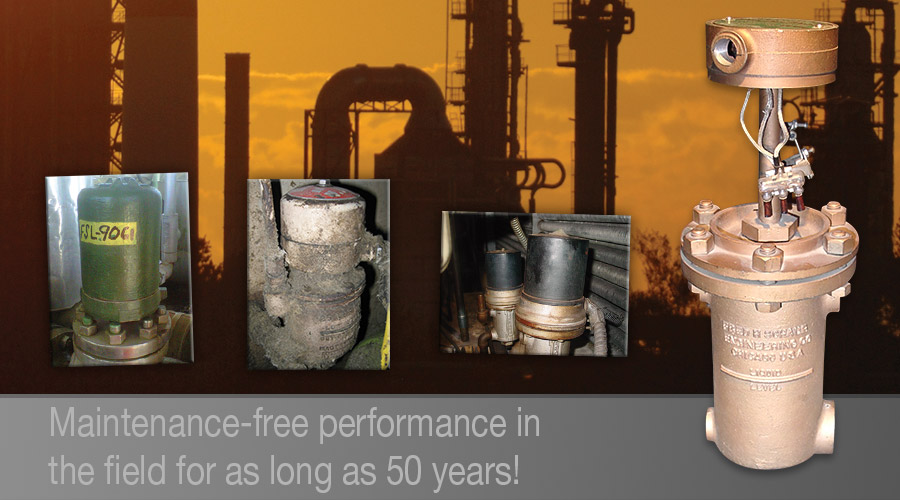
Are you ready to optimize your process with proven, reliable, mechanical level switches? Contact us today for a personalized assessment of how these simplified designs can work in some of the most complex operating environments.

Buoyancy History Brochure
Our Magnetrol® branded products employ many technologies for the measurement and control of level and flow.
Buoyancy technology, with its utilization of float and displacer sensing elements, represents our most time-tested product group.
To this day, buoyancy technology provides optimum solutions for many of today’s level control challenges.


Flow Technology Joins AMETEK Level Measurement Solutions

AMETEK Magnetrol USA LLC Appoints TechStar LLC as Exclusive Channel Partner for Oklahoma

New Partnership Serving The U.S. Midwest Region

The New Old-Fashioned: Enhancing Traditional Level Measurement Techniques

Cut Monitor Technologies and Factors that Affect Their Performance

Plugged Chute Detection

Why Drexelbrook's Level Technology Stands Out Universally

BrightTEK™ – Transforming Remote Monitoring and Industrial Efficiency

Maximize ROI with Drexelbrook® branded Water Cut Meters: An Investment That Pays Off