





Magnetostrictive Level Measurement
Magnetostrictive level measurement uses a sonic pulse and a magnetic float to determine liquid level with high precision. AMETEK LMS offers magnetostrictive transmitters designed for continuous level and interface measurement across a wide range of process vessels.
How Magnetostrictive Level Measurement Works
A low-energy pulse, generated by the electronics, travels the length of the magnetostrictive wire. A return signal is generated from the precise location where the magnetic field of a float intersects the wire. A timer precisely measures the elapsed time between the generation of the pulse and the return of the acoustic signal. Each cycle occurs ten times per second, providing real-time and highly accurate level data.
Common Applications for Magnetostrictive Level Transmitters
Magnetostrictive transmitters are commonly used to measure:
- Continuous liquid level in tanks and vessels
- Liquid-liquid interface level
- Level in applications requiring high accuracy and repeatability
Because the float rides directly on the liquid surface, this technology is well suited for:
- Applications already using a magnetic level indicator
- Processes where a Safe Failure Fraction rating matters for safety instrumented systems
- Direct insertion into process vessels where external mounting isn't practical
The Jupiter® magnetostrictive level transmitter provides a 4-20 mA output, proportional to the level being measured. JUPITER models are designed to attach quickly and easily, via standard clamps, to Atlas® and Gemini® magnetic level indicators or can be directly inserted into a wide variety of process vessels.

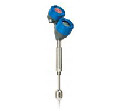
Do you want to learn more about our Jupiter® JM4 magnetostrictive level transmitter?
Contact your local AMETEK Level Measurement Solutions representative!
or contact us with any questions.
Find my local representativeRelated articles

October 15, 2025
AMETEK Magnetrol USA LLC Appoints TechStar LLC as Exclusive Channel Partner for Oklahoma

March 28, 2025
New Partnership Serving The U.S. Midwest Region

March 10, 2025
The New Old-Fashioned: Enhancing Traditional Level Measurement Techniques

February 24, 2025