





- October 5, 2022
Level Measurement Techniques: Minimizing Guided Wave Radar Probe Buildup
Level measurement applications in natural gas, condensate and crude processing have special requirements which are not always evident except through field experience. The potential of solids or other materials building up on a guided wave radar probe is one example.
Natural gas, condensate and crude processing applications can experience paraffin, asphaltenes, hydrates, grit and grime. The degree to which any of these can accumulate on guided wave radar (GWR) probes varies by application. Even in applications where buildup isn’t typically prevalent, it can happen over time, during cold weather periods, or when bringing units up or down due to temperature, pressure, and process material fluctuations. Like distillation columns, chambers / cages / bridles may require cleaning from time to time. Below are some good practices that can minimize buildup and reduce maintenance time.

The experience of AMETEK LMS field engineers has led to the development of some simple but effective level measurement techniques to address field issues related to buildup that may not be evident in data sheets.
Eclipse Model 706 Buildup Detection Feature
Although GWR technology has many advantages, as a contacting technology, the probe can be subject to build-up from process media, particularly viscous or sticky fluids. However, a GWR transmitter with advanced diagnostics can detect and monitor buildup on the probe, allowing the user to schedule cleaning and maintenance before a problem occurs. Another option is to coat the probe with PFA (or similar) to reduce friction and material buildup or assist in corrosive environments (flushing ports can also be provided for in-situ cleaning). Depending on the application, non-contact measurement technology (although not totally free of potential build-up and coating issues) may be preferable for applications with coating, corrosion, or installation concerns.In addition to optional PFA-coated probes, Eclipse GWR transmitters have proactive diagnostics able to scan for buildup, so you know when to schedule cleaning and maintenance.

When the Eclipse Model 706 Buildup Detection Feature is enabled, the waveform is scanned every five minutes with up to five buildup locations being monitored.
CHECK BUILDUP FREQUENTLY
So that an overnight issue (such as occasional condensation on the seal face of a steam probe) will be noticed.
INTERVAL RATE
The interval between rate checking varies. It depends based upon the speed of the buildup increasement.
COMPARISON
During a scan, when a buildup is detected, the locations are checked against all of the previously recorded locations.
OUTPUT
Shown as a % compared to the present threshold value, this feature can be used by the customer as a HART dynamic variable (SV, TV, or QV) for proactive maintenance.

For the buildup percentage reading, the waveform is scanned between the seal face or blocking distance (whichever is lower on the probe) and the start of the level pulse or the end of the probe (whichever is higher on the probe).
Contact us directly for more information on minimizing guided wave radar probe buildup or download the Radar leader Brochure.

Radar Leader Brochure
How can you serve a world of different customers with different applications from different industries? AMETEK Magnetrol does it with a true family of radar transmitters for all different needs. This brochure will introduce you to our Eclipse GWR and Pulsar Radar solutions. You’ll learn why our products are trusted wherever and whenever performance, safety and reliability matter.
Subscribe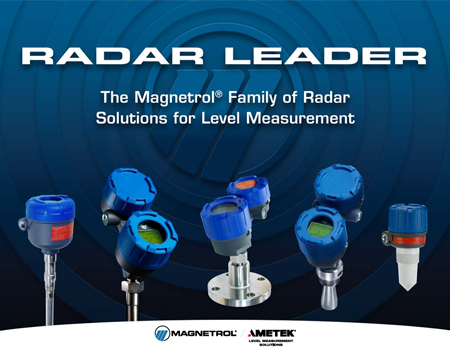
Related Articles

AMETEK Magnetrol USA LLC Appoints TechStar LLC as Exclusive Channel Partner for Oklahoma

New Partnership Serving The U.S. Midwest Region

The New Old-Fashioned: Enhancing Traditional Level Measurement Techniques

Cut Monitor Technologies and Factors that Affect Their Performance

Plugged Chute Detection

Why Drexelbrook's Level Technology Stands Out Universally

BrightTEK™ – Transforming Remote Monitoring and Industrial Efficiency

Maximize ROI with Drexelbrook® branded Water Cut Meters: An Investment That Pays Off

Why Mechanical Instruments Remain Essential for Industrial Level Measurement

Case Study: Not All Guided Wave Radar Transmitters are Created Equal