





Non-Contact Radar
Non-Contact Radar level transmitters are offered with various operating frequencies, each having their own advantages.
- 6 GHz transmitters were the first on the market starting in the early 1990’s. The lower frequency and longer wavelength make the transmitters more suitable for applications having foam or vapors.
- 26 GHz transmitters followed; and, are considered to be the go-to transmitter that can accommodate the majority of all Non-Contact Radar applications.
- Now, higher frequency 80 GHz transmitters, with a very short wavelength and small beam angles, are available for those applications having internal obstructions or space limitations.
There are two types of industrial Non-Contact Radar transmitters:
Pulse Burst Radar
Pulse Burst Radar transmitters, the older of the two types, emit short bursts of energy to the surface of the process medium, and incorporate ultra-high-speed timing circuitry to measure the transit time of the reflected signal. Distance is then calculated utilizing the equation:
Distance = C x Transit Time/2, (where C = Speed of Light)Frequency Modulated Continuous Wave (FMCW) Radar
FMCW devices transmit a continuous signal with a constantly changing frequency down toward the process medium. The detected difference in frequencies between the transmitted signal and return echo is proportion to the distance.
Benefits
- FMCW captures its process variable information in the frequency domain, which supports more accurate signal conversion.
- FMCW utilizes higher receiving sensitivity and higher-strength signals over pulse systems, allowing it to perform better in difficult situations where there may be turbulence, foam or excessive vapors. A higher operating frequency (80 GHz) means a smaller wavelength; which, in turn, results in better resolution, smaller antennas, and a smaller beam angle.

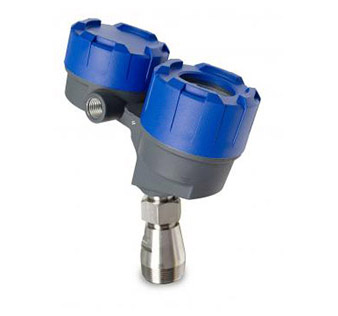
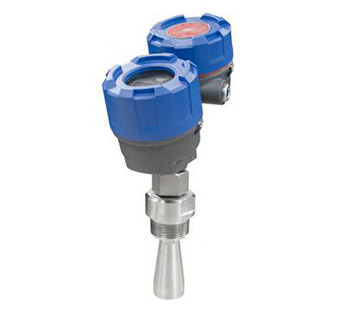
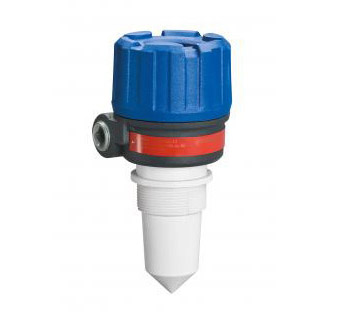
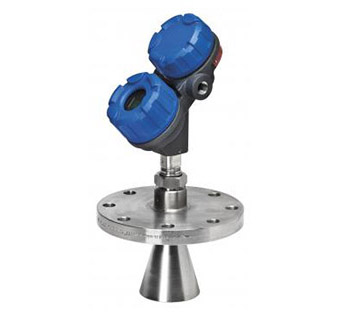
Discover our non-contact radar products
Do you want to learn more about our non-contact radar products?
Contact your local AMETEK Level Measurement Solutions representative!
or contact us with any questions.
Find my local representativeRelated articles

October 15, 2025
AMETEK Magnetrol USA LLC Appoints TechStar LLC as Exclusive Channel Partner for Oklahoma

March 28, 2025
New Partnership Serving The U.S. Midwest Region

March 10, 2025