





- September 21, 2022
The Challenges of Accurate Interface Measurement
Interface or multiphase level measurements exist throughout the oil & gas streams as well as petrochemical. While level measurement technologies have come a long way in effectively measuring liquids and solids, multiphase level measurement continues to be the biggest challenge and opportunity that exists today. However, experience has shown that process optimization and increased uptime can still be achieved in many separator applications through reliable, best-in-class, level technology.

AMETEK - Magnetrol recognizes that interface measurement is a key concern for these industries, as well as many others. With that in mind, Magnetrol has developed a white paper addressing the challenges and considerations around interface measurement and currently available technologies for process optimization.
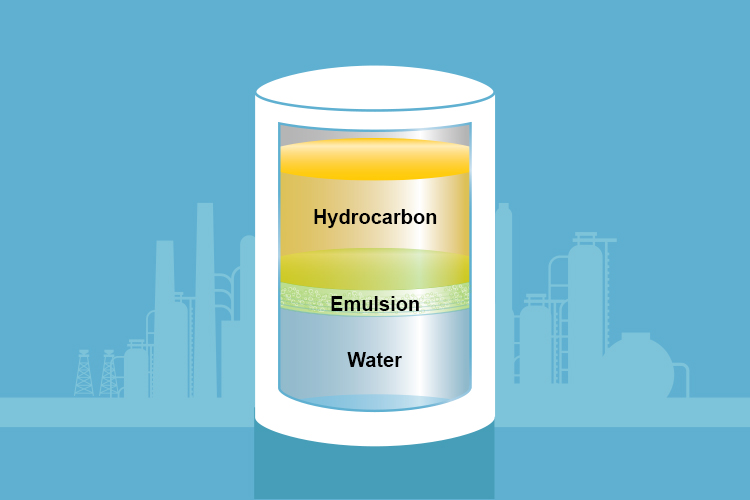
Interfaces can form between liquids and solids, liquid and foam, and liquid and gas; but the emphasis here will be concentrated on liquid/liquid interface (often with a vapor space above the top/lighter liquid). Immiscible liquids meet along an interface layer where they undergo some amount of emulsification. This emulsion layer (also referred to as a “rag” layer) may form a narrow, distinct boundary, but more frequently it is a broader gradient of the mixed liquids. Generally, the thicker the emulsion layer, the greater the measurement challenge.
Of all the level switches and transmitters available, only a handful are suitable for reliable interface measurement. The leading interface measurement technologies include guided wave radar (GWR), buoyancy-based displacers and magnetostrictive, RF capacitance, nuclear/gamma radiation and thermal dispersion. Ideally, the technology utilized for interface applications does not have to differ from other level instruments installed at the facility in order to maintain familiarity with users. Standardizing on a technology helps reduce training, installation & commissioning, maintenance and downtime.
AMETEK - Magnetrol recognizes that interface measurement is a key concern for these industries, as well as many others. With that in mind, Magnetrol has developed a white paper addressing the challenges and considerations around interface measurement and currently available technologies for process optimization.
The Basics of Interface
In the oil & gas and petrochemical industries, the need for reliable interface measurement arises whenever immiscible liquids, those incapable of mixing, reside within the same vessel. The lighter medium rises to the top and the heavier settles at the bottom. In oil production, for example, water or steam is used to extract oil from a well. Well fluids then route to production separators where they settle into their primary constituents as a hydrocarbon over water interface.Interfaces can form between liquids and solids, liquid and foam, and liquid and gas; but the emphasis here will be concentrated on liquid/liquid interface (often with a vapor space above the top/lighter liquid). Immiscible liquids meet along an interface layer where they undergo some amount of emulsification. This emulsion layer (also referred to as a “rag” layer) may form a narrow, distinct boundary, but more frequently it is a broader gradient of the mixed liquids. Generally, the thicker the emulsion layer, the greater the measurement challenge.
Interface Measurement Challenges
While monitoring the top, or total level, is critical for safety and overfill prevention, knowing the level of an interface is necessary for maintaining product quality and operations efficiency. If there is water in oil that is not separated effectively (water carryover), then this can induce processing problems, equipment failures and unplanned shutdowns. If there is oil in water (oil extraction), then there can be production loss, environmental fines, penalties and forced shutdowns.Of all the level switches and transmitters available, only a handful are suitable for reliable interface measurement. The leading interface measurement technologies include guided wave radar (GWR), buoyancy-based displacers and magnetostrictive, RF capacitance, nuclear/gamma radiation and thermal dispersion. Ideally, the technology utilized for interface applications does not have to differ from other level instruments installed at the facility in order to maintain familiarity with users. Standardizing on a technology helps reduce training, installation & commissioning, maintenance and downtime.
Interface in the Field
To learn more about interface measurement challenges and the technologies available to more accurately monitor interface, download our interface white paper.
Related Articles

October 15, 2025
AMETEK Magnetrol USA LLC Appoints TechStar LLC as Exclusive Channel Partner for Oklahoma

March 28, 2025
New Partnership Serving The U.S. Midwest Region

March 10, 2025
The New Old-Fashioned: Enhancing Traditional Level Measurement Techniques

February 24, 2025
Cut Monitor Technologies and Factors that Affect Their Performance

February 12, 2025
Plugged Chute Detection

January 20, 2025
Why Drexelbrook's Level Technology Stands Out Universally

November 7, 2024
BrightTEK™ – Transforming Remote Monitoring and Industrial Efficiency

October 23, 2024
Maximize ROI with Drexelbrook® branded Water Cut Meters: An Investment That Pays Off

October 10, 2024
Why Mechanical Instruments Remain Essential for Industrial Level Measurement

September 23, 2024
Case Study: Not All Guided Wave Radar Transmitters are Created Equal