






Increasing competitive, regulatory, supply chain, and customer demands have driven the need for process improvement in the pulp and paper industry. In our blog series on the Pulp and Paper Industry, we will review the critical impact of level control on improving process efficiencies and safety in pulp and paper mills. In this article, we explore turpentine and liquor recovery processes. In the next one, we will cover plant-wide operations, including Medium Consistency (MC) pump standpipes, water storage, chemicals and additives, and lubrication and hydraulic oils. You can also read our first blog article about the pulp and paper industry, which features level measurement applications from chipping to papermaking processes.
Turpentine Recovery
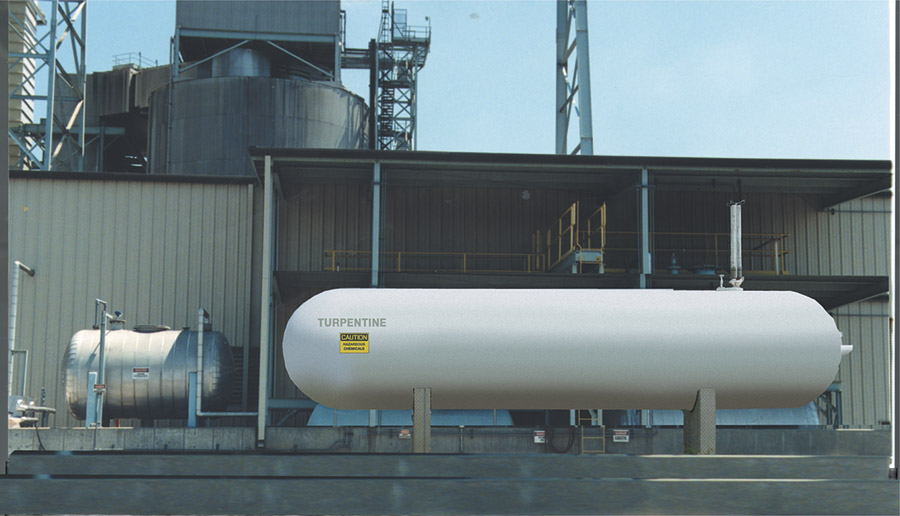
Application: Vapors from the digester contain turpentine, with approximately 85% of it being released during the relief cycle. Recovery of this volatile organic compound (VOC) is undertaken for environmental reasons, to lessen effluent treatment of condensate, to utilize turpentine as a fuel source, or to sell it as a by-product to chemical processors.
Challenges: Two vessels in a typical recovery system require level control of the turpentine/water interface: the decanter, or separator, and the storage tank. As the National Fire Protection Association (NFPA) rates turpentine as a “severe fire hazard,” the decanter is contained in a dyked area. Storage tanks are sometimes located below ground, and controls must be rated explosion-proof.
Level Technologies:
- Echotel® Ultrasonic Switch or Thermatel® Thermal Dispersion Switch for point level
- Eclipse® Guided Wave Radar Transmitter or Pulsar® Non-Contact Radar for continuous level
- Atlas® Magnetic Level Indicator for visual indication
Black, Green, and White Liquor Recovery
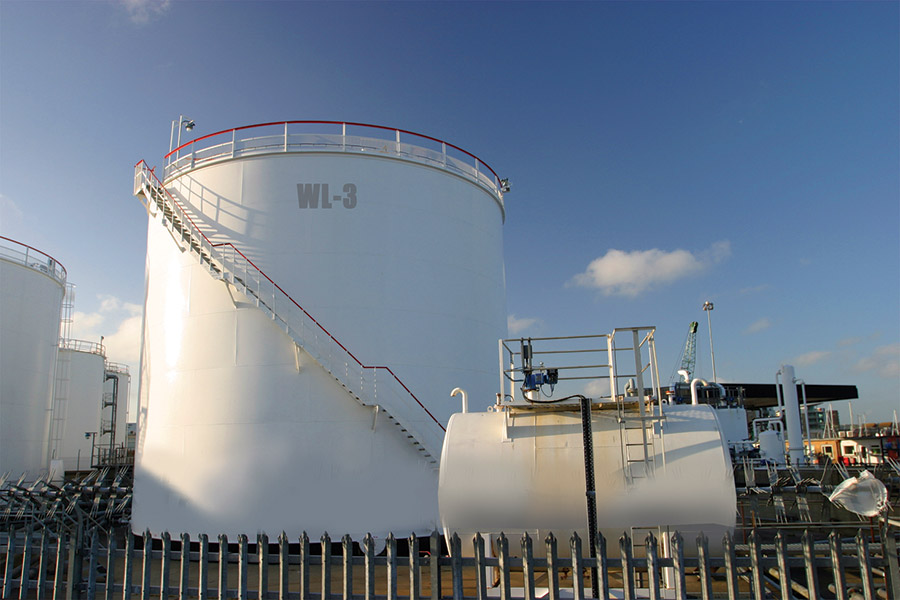
Application: Black liquor is the digester waste mixture of spent chemicals and lignin extracted from wood chips. When burned in a recovery boiler, black liquor produces heat for steam and also releases digester chemicals called “smelt.” Mixed with water, smelt becomes green liquor. This is treated with lime in the causticizers to produce white liquor, the digester’s cooking chemical.
Challenges: Stored in varying concentrations, liquors are corrosive solutions with high levels of organic compounds. Liquors can cause chemical burns or damage the lungs if inhaled. Level sensors contend with the chemical’s harshness, variable density and dielectric, agitation, foaming, and media viscosity. Tank controls should activate the appropriate alarms or emergency shutdown systems.
Level Technologies:
- Thermatel® Thermal Dispersion Switch for point level
- Eclipse® Guided Wave Radar Transmitter (with single rod probe) or Pulsar® Non-Contact Radar for continuous level
Explore the full range of benefits that level control can bring to the pulp and paper industry in our comprehensive brochure.