




4. Draft tube level & compressed air leakage
Some hydroelectric power plants can operate in two different modes: generator mode or synchronous condenser mode. In generator mode, the turbine and the generator are coupled together to generate electricity and send it to the grid for distribution. In synchronous condenser mode, also referred to as Dynamic Power Factor Correction Systems, the turbine and generator are decoupled from each other and the generator now acts as a condenser able to produce or consume reactive power to adjust or compensate for rapid power fluctuations in the electrical grid. To achieve synchronous condenser operation, compressed air is used to lower the water level in the draft below the runner. The high-pressure water used to drive the unit as a generator is shut off, and the circuit breaker connecting it to the utility's electrical grid remains closed still providing a direct connection to the grid. To keep the power consumption of the turbine-generator at a minimum it is necessary to ensure that the turbine is spinning in air above the water level of the draft tube at all times. The turbine elevation is often below the river or tailrace level. In this situation, air pressure in the turbine cavity must be established and maintained at all times during condensing operation. This air pressure will gradually dissipate because of packing leakage. Therefore, after the initial establishment of the air cushion in the turbine cavity, it must be periodically replenished with more air.
Solution
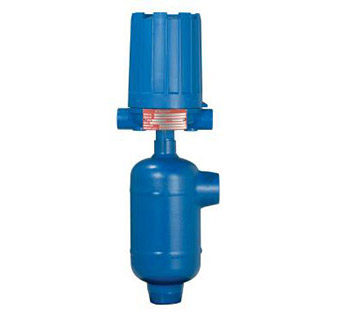
Water levels in the draft tube are controlled using mechanical switches while the compressed air supply is monitored and controlled using our Thermatel TA2 thermal mass flowmeter.
Related products

Other applications
-
3. Dam seepage monitoring (flumes & weirs)
Dam seepage can be a serious problem over time. Many observations are taken into consideration in monitoring possible dam seepage issues including visual inspections, flow measurements, water property changes, sediment accumulation in the open channel flow stations just to name a few.
Do you want personal advice for your specific control process?
Contact your local AMETEK Level Measurement Solutions representative!
Find my local representativeRelated articles

AMETEK Magnetrol USA LLC Appoints TechStar LLC as Exclusive Channel Partner for Oklahoma

New Partnership Serving The U.S. Midwest Region

The New Old-Fashioned: Enhancing Traditional Level Measurement Techniques

Cut Monitor Technologies and Factors that Affect Their Performance

Plugged Chute Detection

Why Drexelbrook's Level Technology Stands Out Universally

BrightTEK™ – Transforming Remote Monitoring and Industrial Efficiency

Maximize ROI with Drexelbrook® branded Water Cut Meters: An Investment That Pays Off

Why Mechanical Instruments Remain Essential for Industrial Level Measurement

Case Study: Not All Guided Wave Radar Transmitters are Created Equal